
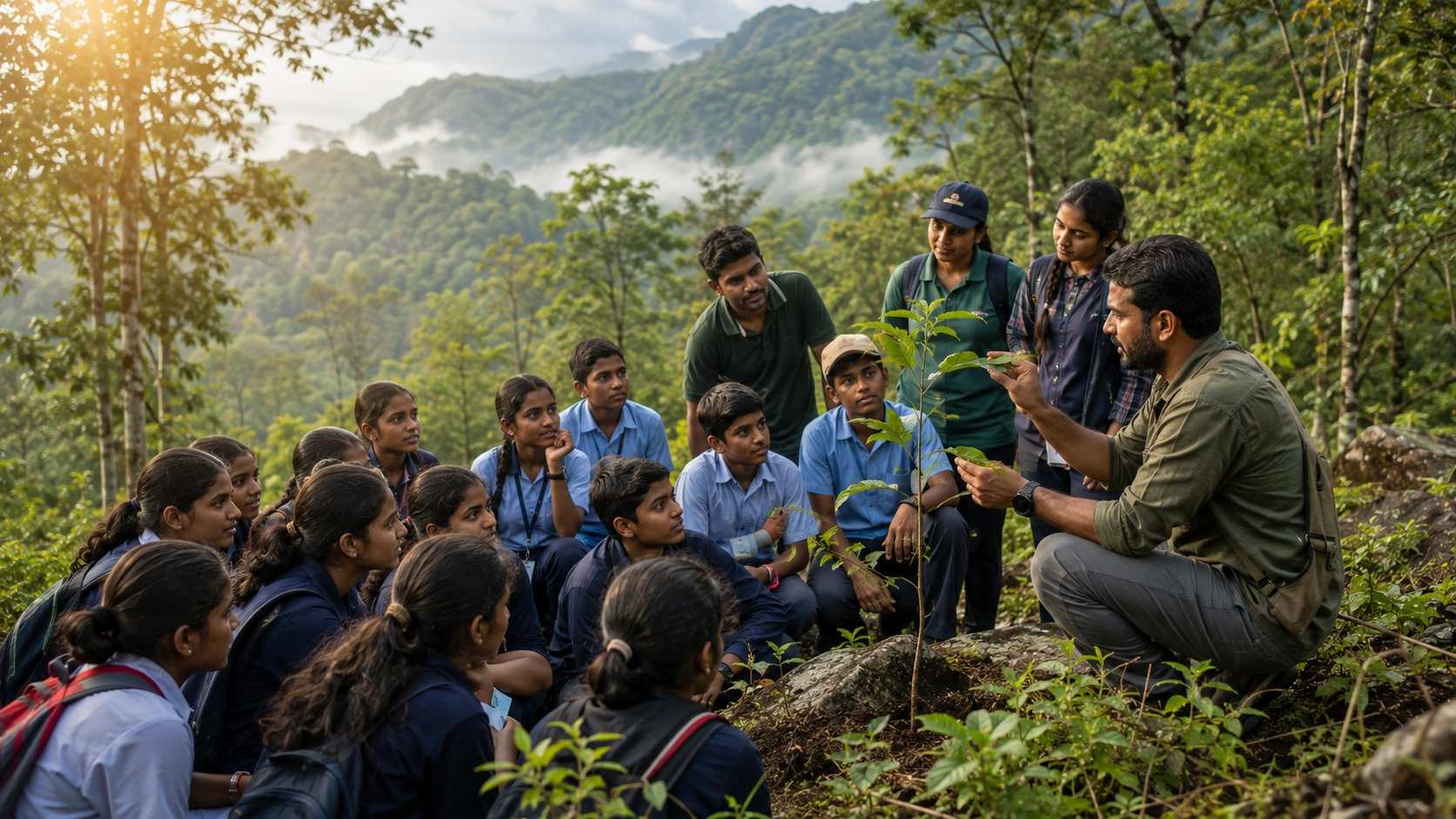
Conservation begins with awareness, but awareness alone is not enough. Protecting forests, wildlife, native trees and biodiversity requires people who are willing to understand nature, care about its future and take meaningful action.
The next generation has a vital role to play in this journey. By helping young people develop a deeper connection with nature, we can build a future where conservation becomes part of everyday life.
Why Conservation Education Matters
Young people are naturally curious about the world around them. Introducing them to forests, wildlife, plants and local ecosystems can help transform curiosity into understanding.
Environmental education can teach students not only about endangered species and climate change, but also about the relationships that connect water, soil, trees, animals and communities.
When people understand why an ecosystem matters, they are more likely to protect it.
Turning Knowledge Into Action
Conservation education should extend beyond classrooms. Nature walks, biodiversity observations, native tree planting, clean-up activities and community programmes can give young people opportunities to experience conservation directly.
Small actions can create lasting habits. Learning to identify native trees, observing birds without disturbing them, reducing waste and respecting wildlife are simple steps that can develop a lifelong conservation mindset.
Connecting Young People With Nature
Technology has transformed how young people learn and communicate, but direct experiences with nature remain powerful.
Spending time in forests, wetlands, grasslands and other natural environments can create an emotional connection that books and screens cannot fully replace.
A child who learns to recognise a native tree or watches a bird build its nest may begin to see the natural world not as something distant, but as something worth protecting.
Encouraging Community Leadership
Young conservationists can become powerful voices within their communities. They can share environmental knowledge with friends and families, participate in local initiatives and encourage responsible behaviour.
Schools, colleges, conservation organisations and community groups can support this leadership by providing opportunities for young people to participate in real conservation activities.
From Individual Actions to Collective Impact
One person planting a native tree may seem like a small contribution. Hundreds of people protecting native trees, restoring habitats, reducing waste and supporting wildlife can create meaningful ecological impact.
Conservation grows through collective action. Every volunteer, student, educator, researcher and community member can contribute to a larger movement.
Building Guardians for the Future
The future of conservation depends not only on protected forests and wildlife reserves, but also on people who understand their importance.
By investing in environmental education, encouraging outdoor learning and creating opportunities for young people to participate in conservation, we can nurture a generation that sees nature as a shared responsibility.
The journey from awareness to action begins with one important step: helping people care about the natural world.
When that awareness becomes responsibility, and responsibility becomes action, the next generation can become true guardians of our forests, wildlife, trees and biodiversity.