
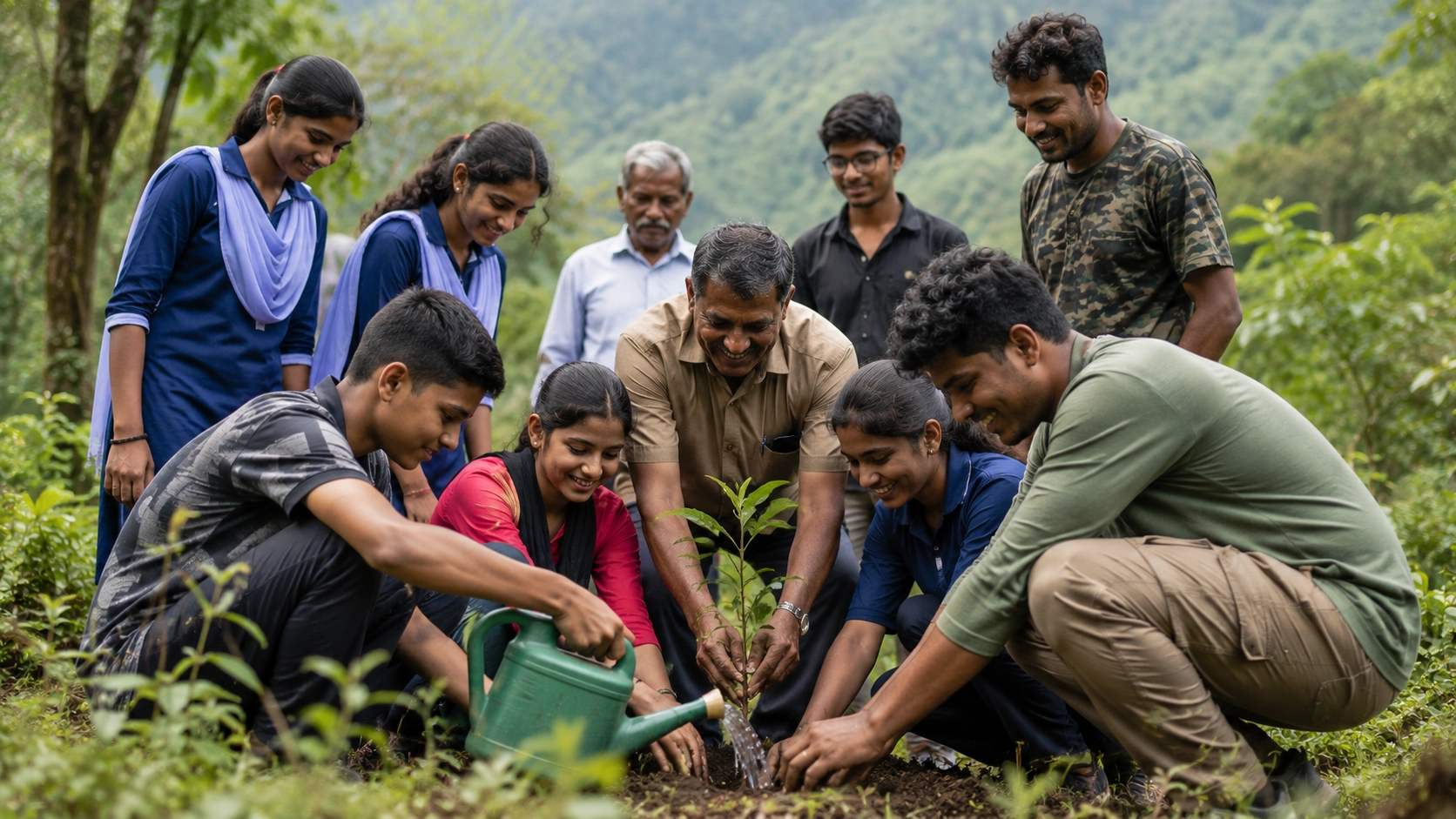
Conservation is most successful when people and nature are protected together. Forests, wildlife and biodiversity cannot be preserved through isolated efforts alone. Long-term conservation depends on the active participation, knowledge and commitment of local communities.
Across the Western Ghats, communities have lived alongside forests for generations. Their understanding of local landscapes, seasons, wildlife and natural resources can become a powerful part of conservation efforts.
Why Communities Matter
People living near forests are often the first to notice changes in the environment. They may observe changes in water availability, animal movement, forest health or the presence of invasive plants long before these changes are documented elsewhere.
Recognising this knowledge and involving communities in conservation planning can make environmental programmes more practical, effective and sustainable.
Creating Local Conservation Awareness
Education and awareness are important foundations for community participation. Schools, villages, community groups and local organisations can help people understand the importance of biodiversity and healthy habitats.
Simple initiatives such as native tree planting, waste reduction, responsible tourism and wildlife awareness can encourage individuals to become active participants in protecting their surroundings.
Supporting Sustainable Livelihoods
Conservation should also consider the economic needs of communities. When people have access to sustainable livelihood opportunities, there can be greater motivation and capacity to protect natural resources.
Nature-based livelihoods, responsible ecotourism, sustainable agriculture, native plant nurseries and other environmentally responsible activities can help connect community well-being with conservation.
Reducing Human–Wildlife Conflict
Communities living close to wildlife habitats often experience encounters with wild animals. Addressing these challenges requires local participation.
Community awareness programmes, early-warning systems, responsible waste management, safe agricultural practices and communication with forest authorities can help reduce risks for both people and wildlife.
Young People as Conservation Leaders
Young people can play an important role in building a conservation-minded future. School nature clubs, biodiversity surveys, tree-planting programmes and environmental education can help younger generations develop a lasting connection with nature.
When children learn to appreciate local forests and wildlife, conservation becomes part of the community’s future rather than simply a short-term project.
Working Together for Nature
Effective conservation requires collaboration between communities, conservation organisations, researchers, government agencies and responsible institutions.
Each group brings different knowledge and capabilities. When these strengths are combined, conservation projects can become more inclusive, locally relevant and sustainable.
A Shared Responsibility
Protecting nature is not the responsibility of one organisation or one group of people. Every community member can contribute in meaningful ways.
By listening to local knowledge, supporting sustainable livelihoods, educating future generations and involving people in conservation decisions, we can build stronger relationships between communities and the natural world.
Conservation becomes stronger when communities are not simply beneficiaries of nature, but active guardians of it.