
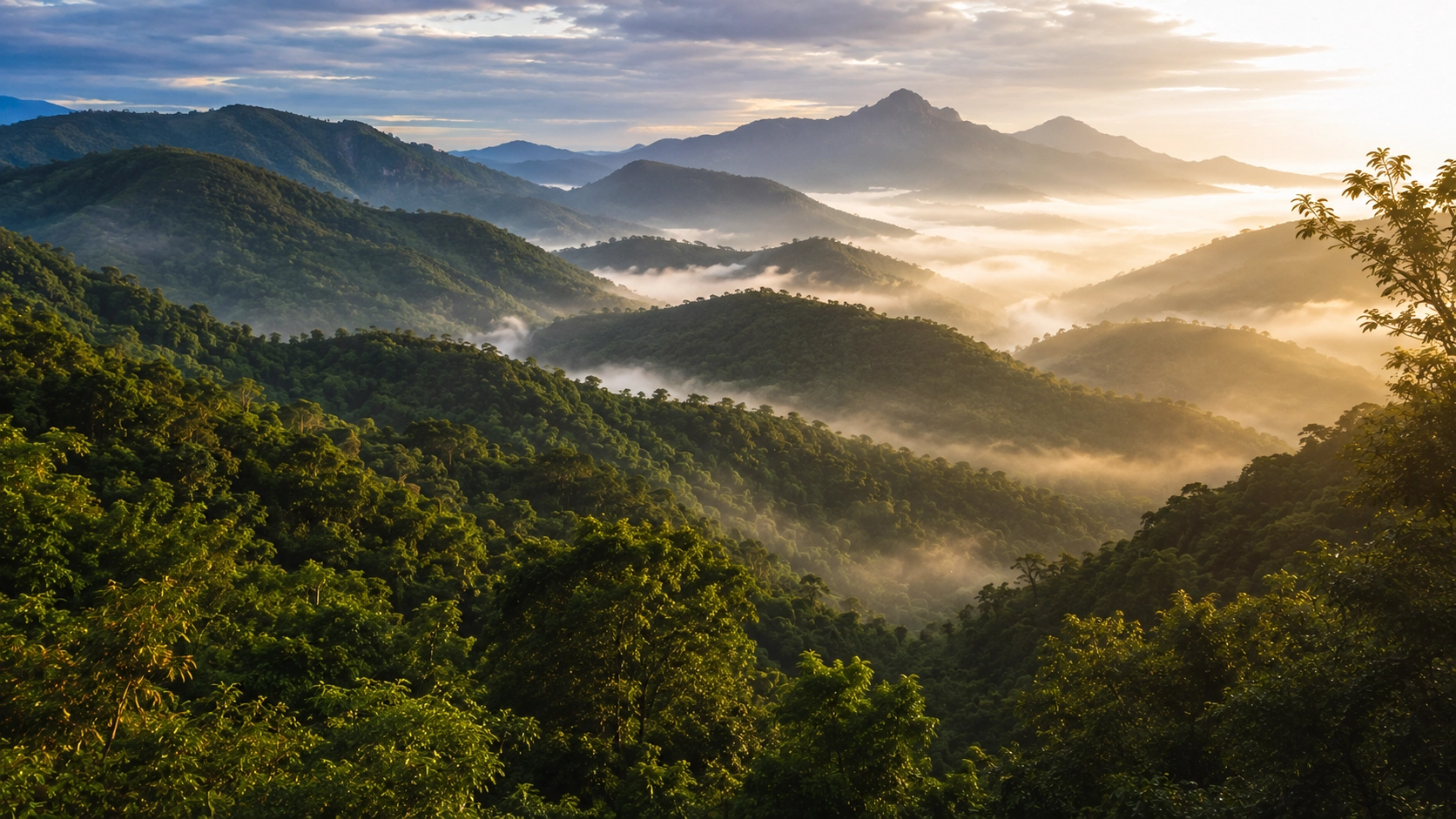
The Western Ghats are one of India’s most important natural landscapes and one of the world’s richest biodiversity hotspots. Stretching along the western side of the Indian peninsula, these ancient mountains support forests, rivers, grasslands, wildlife and countless plant species. For millions of people, the Western Ghats are also an essential source of water, food, livelihoods and climate stability.
A Living Home for Biodiversity
The Western Ghats provide habitat for a remarkable variety of wildlife, including elephants, Nilgiri tahrs, lion-tailed macaques, tigers, leopards, endemic birds, amphibians, reptiles and countless insects. Many species found here exist nowhere else on Earth.
Protecting these habitats is therefore more than protecting individual animals. It means conserving the entire ecosystem that allows plants, animals, microorganisms and natural processes to survive together.
Why Habitat Conservation Matters
Habitat loss is one of the greatest threats to biodiversity. Deforestation, unplanned development, road expansion, mining, invasive species, forest fires and human-wildlife conflict can gradually fragment natural habitats.
When forests become divided into smaller areas, wildlife populations can become isolated. Animals may struggle to find food, water and safe breeding areas, while plants may lose the conditions required for natural regeneration.
Habitat conservation helps maintain connected landscapes where wildlife can move naturally and ecosystems can continue functioning.
Protecting Our Water Sources
The Western Ghats play a vital role in India’s water security. Their forests capture rainfall, recharge groundwater and regulate the flow of streams and rivers.
Healthy forests slow down water runoff, reduce soil erosion and help maintain water availability during drier periods. Protecting forest habitats therefore benefits not only wildlife but also villages, farmers and communities that depend on these water systems.
Forests and Climate Resilience
Natural forests also act as important carbon stores. Healthy ecosystems absorb and store carbon while helping regulate local temperatures and rainfall patterns.
Conserving the Western Ghats can strengthen the resilience of landscapes against climate-related pressures such as extreme rainfall, drought and rising temperatures. Restoring degraded habitats can further improve the ability of ecosystems to recover from environmental stress.
Creating Safe Spaces for Wildlife
Wildlife needs more than protected boundaries. Animals require sufficient habitat, food, water and safe movement routes.
Conservation efforts should therefore focus on protecting important habitats, restoring degraded forest areas and maintaining wildlife corridors. Such measures can reduce habitat fragmentation and help animals move between suitable landscapes.
Conservation Is a Shared Responsibility
Protecting the Western Ghats cannot be achieved by governments and conservation organisations alone. Local communities, landowners, businesses, researchers, students and citizens all have an important role to play.
Supporting native tree planting, reducing waste, preventing forest fires, respecting wildlife habitats and promoting responsible development are simple but meaningful steps toward conservation.
Protecting the Future
The Western Ghats are not simply a collection of forests and mountains. They are a living system that supports biodiversity, water, climate and human communities.
When we protect habitats, we protect the relationships that keep ecosystems healthy. Every forest saved, every native tree restored and every wildlife corridor protected contributes to a more resilient future.
Conserving the Western Ghats today is an investment in generations yet to come. By working together to protect habitats and respect nature, we can help ensure that the mountains, forests, animals and species of the Western Ghats continue to thrive.