
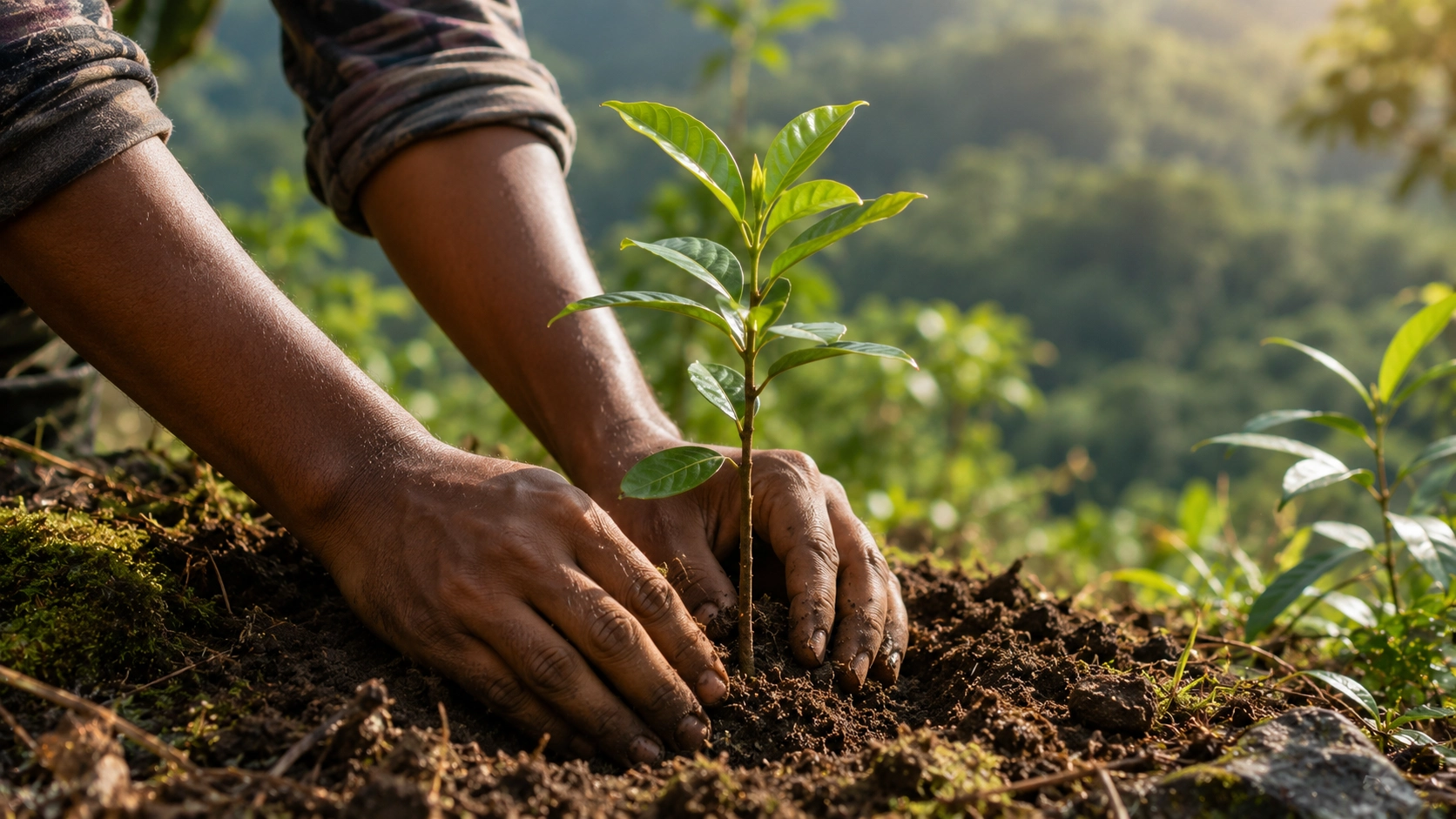
Native trees are far more than beautiful elements of a landscape. They are the foundation of healthy forests and play a vital role in supporting biodiversity, protecting soil, conserving water and maintaining ecological balance.
Across the Western Ghats, native forests provide essential habitats for wildlife while supporting the natural processes that sustain surrounding communities. Protecting and restoring these trees is therefore one of the most important steps toward long-term conservation.
What Are Native Trees?
Native trees are species that have naturally evolved in a particular region over thousands of years. They are adapted to the local climate, soil, rainfall patterns and wildlife.
Because of this long relationship with their environment, native trees form complex connections with insects, birds, mammals, fungi and other plants.
Supporting Wildlife
Native trees provide food, shelter and nesting spaces for countless species. Their fruits, flowers, leaves, bark and seeds support different animals throughout the year.
Birds depend on native trees for nesting and feeding, while insects rely on specific plants for survival. Larger animals also benefit from the fruits, shade and shelter provided by healthy forests.
Planting and protecting native species therefore helps restore entire ecological communities rather than simply increasing the number of trees.
Protecting Water and Soil
Forests play an important role in maintaining healthy watersheds. Tree roots hold soil together, reduce erosion and help rainwater enter the ground.
Native vegetation can also contribute to maintaining streams, springs and groundwater systems. Protecting forests around water sources is especially important for both wildlife and human communities.
Helping the Climate
Trees absorb carbon dioxide from the atmosphere and store carbon in their trunks, branches, roots and surrounding soil. Healthy forests can therefore contribute to climate resilience while also providing shade and reducing local temperatures.
However, conservation is not simply about planting large numbers of trees. Protecting existing natural forests and restoring them with appropriate native species is essential for creating functioning ecosystems.
Why Native Species Matter in Restoration
Not every tree is suitable for every landscape. Introducing non-native or invasive species can sometimes disrupt local ecosystems and compete with naturally occurring plants.
Ecological restoration should therefore focus on locally appropriate native species, natural regeneration and the specific conditions of each habitat.
Communities and Tree Conservation
Tree conservation becomes stronger when local communities are involved. Awareness programmes, native tree nurseries, school initiatives and community-led restoration projects can encourage people to understand the ecological value of native forests.
Every native tree protected today can become a habitat, food source and ecological resource for generations to come.
Growing a Healthier Future
Native trees connect the entire ecosystem. They support wildlife, protect water, enrich soil, store carbon and create the conditions necessary for countless species to survive.
Protecting existing native forests should always be a priority, while carefully planned restoration can help recover degraded landscapes.
When we protect native trees, we protect much more than trees – we protect the living ecosystem that depends on them.